
 Open 7days. 6am to 10pm




Most homeowners vacuum regularly and assume that’s enough to keep carpets clean and healthy. In reality, vacuuming only removes surface debris, while dust mites, bacteria, mould spores, and trapped allergens settle deep within the fibres where a household vacuum simply can’t reach. Understanding what actually lives in your carpet, and knowing the warning signs that it’s time for a deeper clean, can make a real difference to both your home’s hygiene and your family’s health when it comes to hiring experts who offer the best carpet cleaning in Brighton.
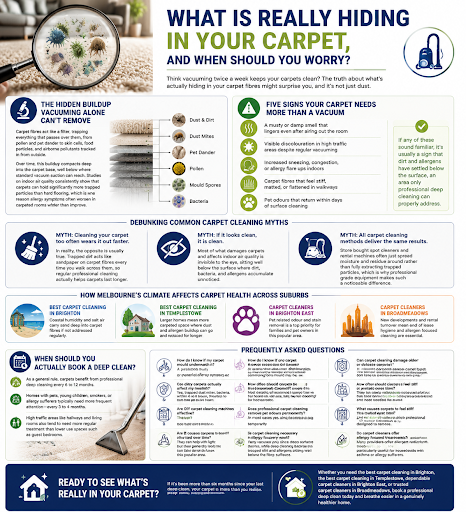
The Hidden Buildup Vacuuming Alone Can’t Remove
Carpet fibres act like a filter, trapping everything that passes over them, from pollen and pet dander to skin cells, food particles, and airborne pollutants tracked in from outside. Over time, this buildup compacts deep into the carpet base, well below where standard vacuum suction can reach. Studies on indoor air quality consistently show that carpets can hold significantly more trapped particles than hard flooring, which is one reason allergy symptoms often worsen in carpeted rooms rather than improve. This is why hiring skilled carpet cleaners in Brighton East becomes vital.
Five Signs Your Carpet Needs More Than a Vacuum
It’s not always obvious when a carpet has crossed from “a bit dusty” to genuinely unhygienic. Watch for these warning signs:
- A musty or damp smell that lingers even after airing out the room
- Visible discolouration in high-traffic areas despite regular vacuuming
- Increased sneezing, congestion, or allergy flare-ups indoors
- Carpet fibres that feel stiff, matted, or flattened in walkways
- Pet odours that return within days of surface cleaning
If any of these sound familiar, it’s usually a sign that dirt and allergens have settled below the surface, an area only professional deep cleaning can properly address.
Debunking Common Carpet Cleaning Myths
There’s a lot of misinformation around carpet care, and some of the most common myths actually make carpets dirtier over time.
- Myth: Cleaning your carpet too often wears it out faster.
In reality, the opposite is usually true. Trapped dirt acts like sandpaper on carpet fibres every time you walk across them, so regular professional cleaning actually helps carpets last longer. - Myth: If it looks clean, it is clean.
Most of what damages carpets and affects indoor air quality is invisible to the eye, sitting well below the surface where dirt, bacteria, and allergens accumulate unnoticed. - Myth: All carpet cleaning methods deliver the same results.
Store-bought spot cleaners and rental machines often just spread moisture and residue around rather than fully extracting trapped particles, which is why professional-grade equipment makes such a noticeable difference.
How Melbourne’s Climate Affects Carpet Health Across Suburbs
Melbourne’s mix of coastal humidity, seasonal rainfall, and dust from busy roads means carpet care needs can vary depending on where you live. Homeowners searching for the best carpet cleaning in Brighton often deal with sand and salt air carried in from the coast, which can settle deep into fibres if not addressed regularly.
- Meanwhile, those looking into the best carpet cleaning in Templestowe are frequently managing larger homes with more carpeted square footage, where dust and allergen buildup can go unnoticed for longer simply due to the size of the space.
- Further south, residents comparing carpet cleaners in Brighton East often prioritise pet-related odour and stain removal, given the area’s popularity with families and pet owners.
- In the north, growing demand for carpet cleaners in Broadmeadows reflects a mix of new developments and rental turnover, where end of lease hygiene standards make thorough, allergen focused cleaning especially important.
When Should You Actually Book a Deep Clean?
As a general rule, carpets benefit from professional deep cleaning every six to twelve months, though this depends heavily on household factors. Homes with pets, young children, smokers, or allergy sufferers typically need more frequent attention, sometimes every three to four months, to keep indoor air quality in check. High traffic areas like hallways and living rooms also tend to need more regular treatment than lower use spaces such as guest bedrooms. You can trust qualified carpet cleaners in Broadmeadows to deliver exceptional results.
Ready to See What’s Really in Your Carpet?
If it’s been more than six months since your last deep clean, your carpet is likely holding more than you realise. Whether you need the best carpet cleaning in Brighton, Templestowe, or Broadmeadows, book the experts of Best Carpet Cleaning Melbourne for a professional deep clean today and breathe easier in a genuinely healthier home.
FAQ's About What Is Really Hiding in Your Carpet
- How do I know if my carpet has mould underneath it?
A persistent musty smell, discolouration, or worsening allergy symptoms are common signs mould may be developing beneath the surface.
- Can dirty carpets actually affect my health?
Yes, trapped dust mites, bacteria, and allergens can contribute to respiratory irritation, allergy flare-ups, and reduced indoor air quality.
- How often should carpets be professionally cleaned?
Most experts recommend every six to twelve months, with more frequent cleaning for homes with pets, kids, or allergy sufferers.
- Does professional carpet cleaning remove pet odours permanently?
In most cases yes, since deep extraction removes odour causing bacteria at the source rather than masking the smell temporarily.
- Is carpet cleaning necessary if I vacuum every week?
Yes, vacuuming only removes surface debris, while deep cleaning addresses trapped dirt and allergens sitting well below the fibre surface.
- Can carpet cleaning damage older or delicate carpets?
Reputable providers assess carpet type and material before cleaning, using appropriate methods to protect wool, blended, and heritage carpets.
- How long should I stay off carpets after cleaning?
Most carpets are dry enough to walk on within four to eight hours, though full drying can take up to twenty-four hours.
- Are DIY carpet cleaning machines effective?
They can help with light maintenance, but they generally lack the suction power and heat needed for a true deep clean.
- What causes carpets to feel stiff or matted over time?
This is usually caused by compacted dirt and residue buildup, which professional hot water extraction is specifically designed to remove.
- Do carpet cleaners offer allergy-focused treatments?
Many providers offer allergen reduction treatments alongside standard cleaning, particularly useful for households with asthma or allergy sufferers.
